

Wood and vinyl can both give a Long Island yard privacy. When you’re comparing a wood vs vinyl fence, the better choice usually comes down to two questions: do you want the character and finishing flexibility of real wood, and how much upkeep are you willing to take on? Choosing a color before answering those questions puts the decision in the wrong order.
All Island Fence & Railing’s wood fences include spruce and cedar in privacy, picket and semi-privacy styles. The vinyl range is another way to get a defined yard with less routine finishing. Compare the complete fence you need, including gates and installation, rather than one attractive panel in a photograph.
Start with what you want the fence to do
Stand where you actually use the yard. The view from a kitchen window can be quite different from the view at a patio table. Identify the specific sightline you want to block, the part of the garden you want to keep visible and the routes people use to reach the driveway or shed. That tells you whether the project calls for solid privacy, an open picket design or a combination.
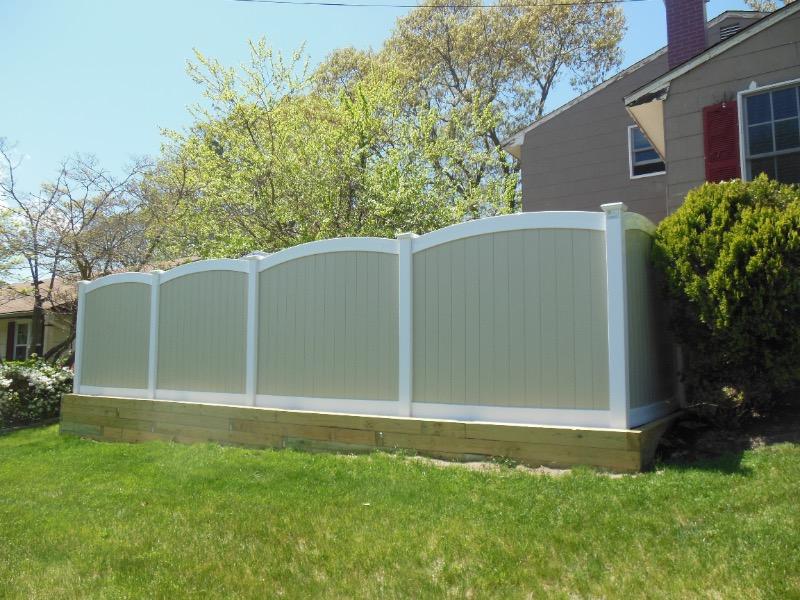
Material alone does not determine privacy. A wood picket fence and a wood privacy fence answer different needs. The same is true within vinyl. Board spacing, panel layout, height and ground clearance all matter. Ask to see the proposed style from both sides, especially along a shared boundary. Your neighbor will look at the back of the fence even though you are choosing it.
Use this short decision list before discussing colors:
- For a natural wood appearance and the ability to change a finish, compare spruce and cedar designs.
- For privacy without a recurring staining project, compare the available vinyl privacy panels.
- For an open garden boundary, compare picket spacing and proportions in both materials.
- For dogs, include gate gaps and the bottom of the fence in the discussion, not just panel height.
- For mixed needs, mark each section of the yard separately instead of assuming the entire perimeter needs one treatment.
Wood vs vinyl fence: the upkeep difference
| Wood | Vinyl | |
|---|---|---|
| Look | Natural texture that changes over time | Consistent, uniform finish |
| Finishing | Needs a suitable finish and recoating schedule | No staining decision |
| Ongoing care | Finish upkeep, plus inspection | Cleaning, plus inspection |
| Gates and hardware | Need regular checks | Need regular checks |
| Weather | Sun and moisture affect the finish and the boards | Ask how the product handles sun and temperature swings |
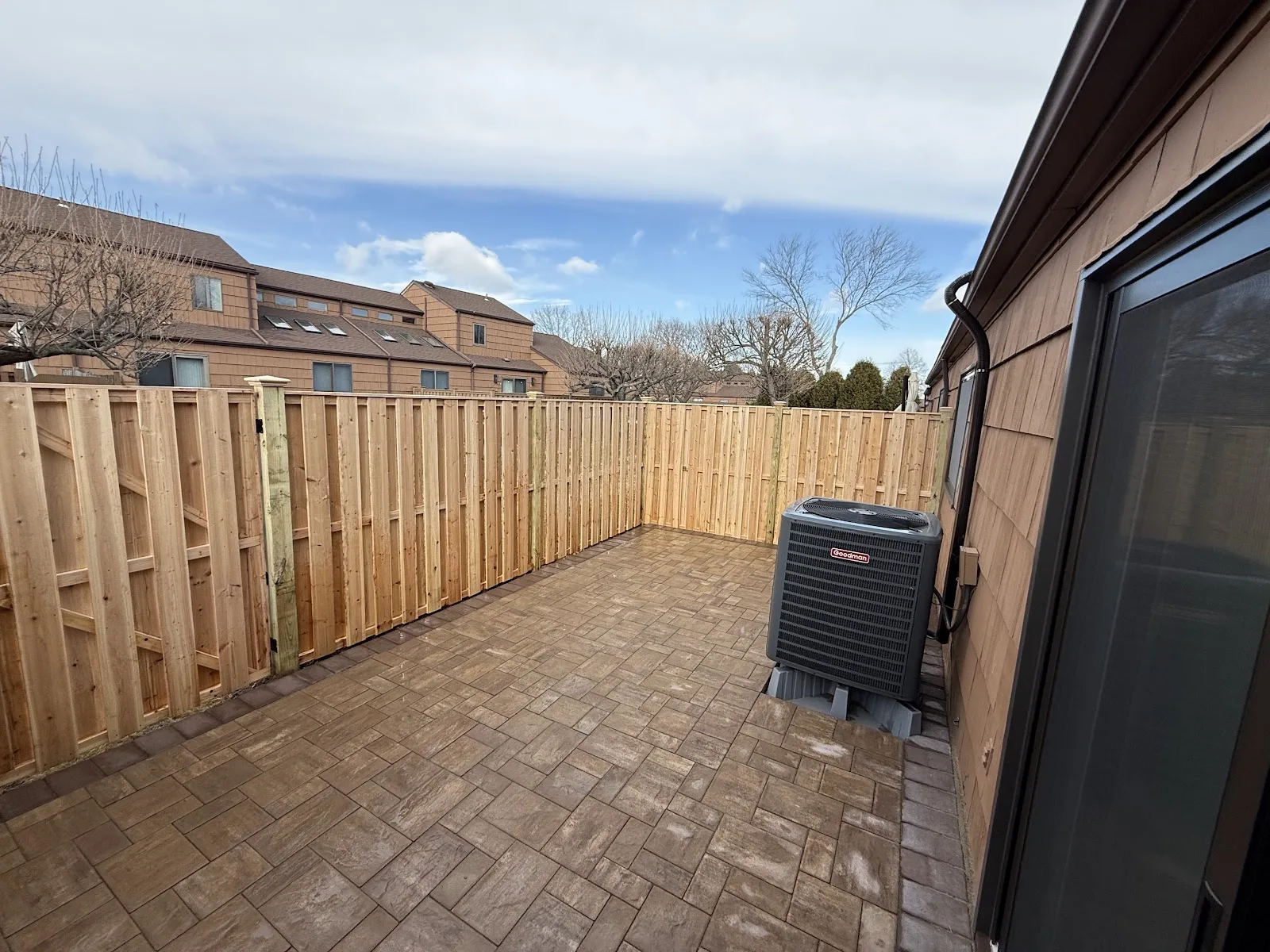
Wood asks for attention. The appearance you choose on installation day will change outdoors unless you maintain an appropriate finish. All Island Fence & Railing specifically describes cedar as a product that needs maintenance. If preserving a particular color is important, ask what finish is suitable and what inspection and recoating schedule the chosen product requires.
Vinyl removes the staining decision, but it still deserves inspection and cleaning appropriate to the manufacturer’s instructions. Gates need to operate properly, hardware needs attention and accidental damage needs assessment. Calling a fence low maintenance should not turn into a promise that nobody will ever need to look at it again.
Think about your real weekends. If the idea of maintaining a wood finish already feels like a chore, that preference belongs in the buying decision. If you like the texture of natural wood and accept changes in its appearance, do not dismiss it simply because another option needs less finishing. Neither preference is wrong. They just lead to different specifications.
Compare the two materials on your own fence line. Bring photographs of the yard and a list of the areas you want fenced. Take a look at All Island Fence & Railing’s vinyl installation range and request an estimate that includes the gates and access you need.
Compare complete quotes, not a price per panel
A material comparison is useful only when the two proposals describe the same job. A wood quote with one gate cannot fairly be compared with a vinyl quote that includes two wider gates and removal of an old fence. Mark the proposed run on the same property plan and keep the intended height and access requirements consistent.
Ask each proposal to identify the product or wood species, style, post system, gate sizes, removal and disposal, and any work excluded from the price. If a detail is still unknown, have it written down as an allowance or as an item waiting on a site visit. A vague promise to sort it out later is difficult to compare and even harder to budget around.
There is no useful universal winner on installed cost without those details. A small straightforward boundary and a yard with several corners, gates and changes in grade are different jobs. The most helpful estimate shows what your money buys on your property. A broad online average cannot tell you whether the proposed fence includes the opening you need for a mower.
Gates can change your preference
Walk the gate route before choosing its position. Carrying groceries, moving bins and getting equipment into the yard are everyday tasks, and a gate placed for symmetry may make all three awkward. Note which way it should open and what is behind it. A path, planting bed or change in ground level can limit that movement.
Ask how the proposed gate will be supported and which hardware belongs to that specific system. A wide opening can’t be treated like a narrow walk-through gate. Material, width, support and use have to work together. Seeing an example of the actual gate style is more useful than relying on a photograph of a fence panel with no opening in it.
Make the local checks before ordering
For a Long Island property, confirm your boundary and the requirements for your address with the town or village. Front-yard and rear-yard conditions may differ. A pool barrier brings another set of questions. Avoid treating a neighbor’s fence as proof that the same layout or height is allowed on your lot.
Then choose the material with a clear maintenance expectation and a complete plan. If you are leaning toward wood, start with All Island Fence & Railing. Ask to see the actual style, both faces and the matching gate. That is a firmer basis for a decision than choosing whichever sample looks nicest in isolation.
When you’re ready, bring your property plan and a short note on what the fence should do, then request an estimate or call 516-442-0012.


