
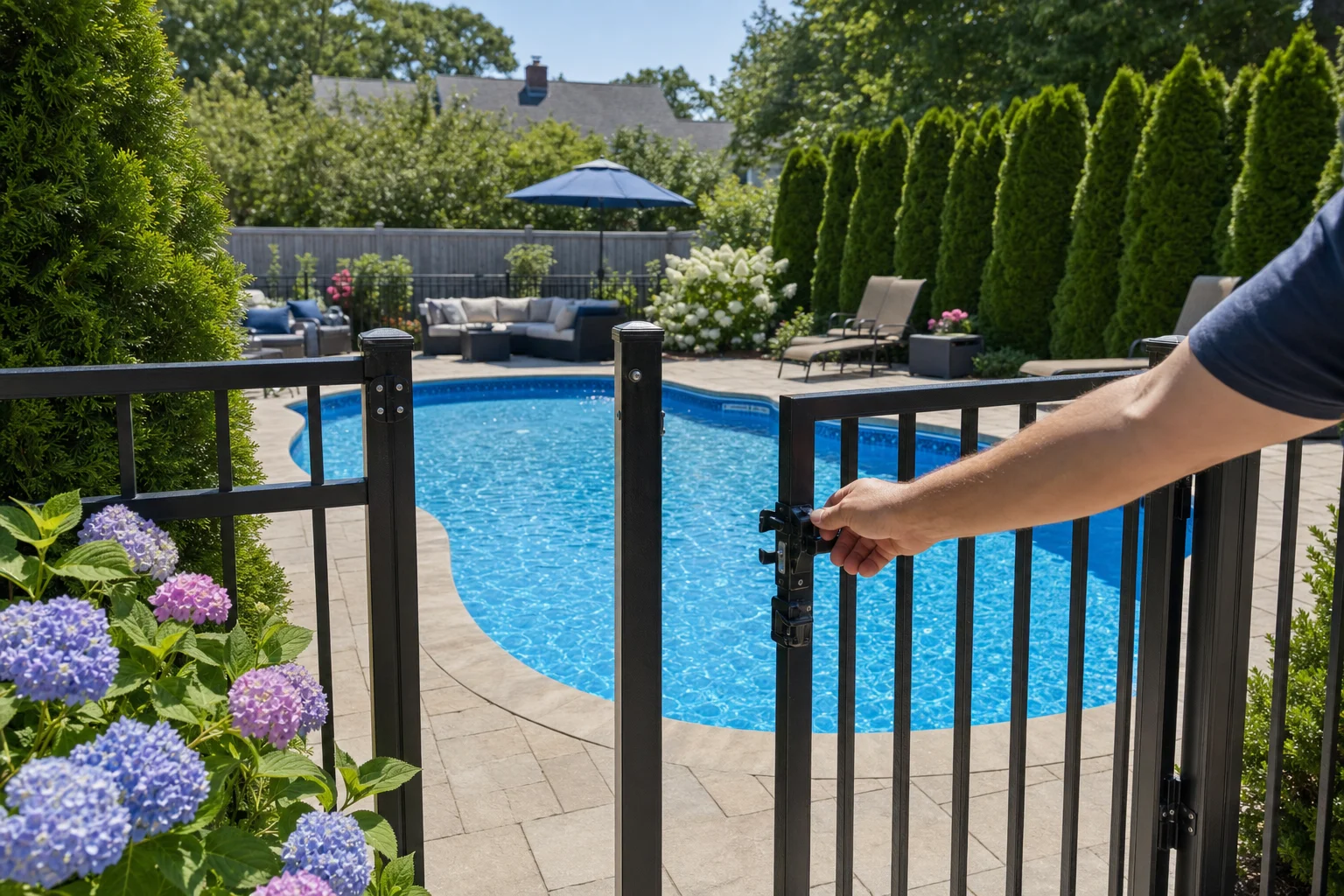
Quick answer: New York requires a barrier around residential pools, and aluminum fencing is the most common way to meet it. Barriers are generally at least 48 inches tall with a self-closing, self-latching gate. Always confirm the exact rules with your town before you build.
If you have a pool on Long Island, a fence is not optional, it is required by law and, more importantly, it keeps children and pets safe around the water. Aluminum is the material most homeowners choose for the job because it is strong, rust-resistant, and clean-looking without blocking the view of the pool. Here is how aluminum pool fencing works, what the New York rules generally ask for, and the details inspectors actually check, so your barrier passes and does its real job of keeping everyone safe.
Pool barrier basics in New York
New York follows a statewide safety code that requires a barrier around residential pools. In broad terms, the barrier needs to be tall enough that it cannot be climbed easily, close enough to the ground that a small child cannot slip underneath, and fitted with a gate that closes and latches on its own every single time. Exact heights, spacing, and gate details are enforced by your local town, and they can vary, so it is important to check the local requirements before you install anything. Many towns publish their pool rules, and we help homeowners line those details up so the project is right the first time.
Why homeowners choose aluminum for pools
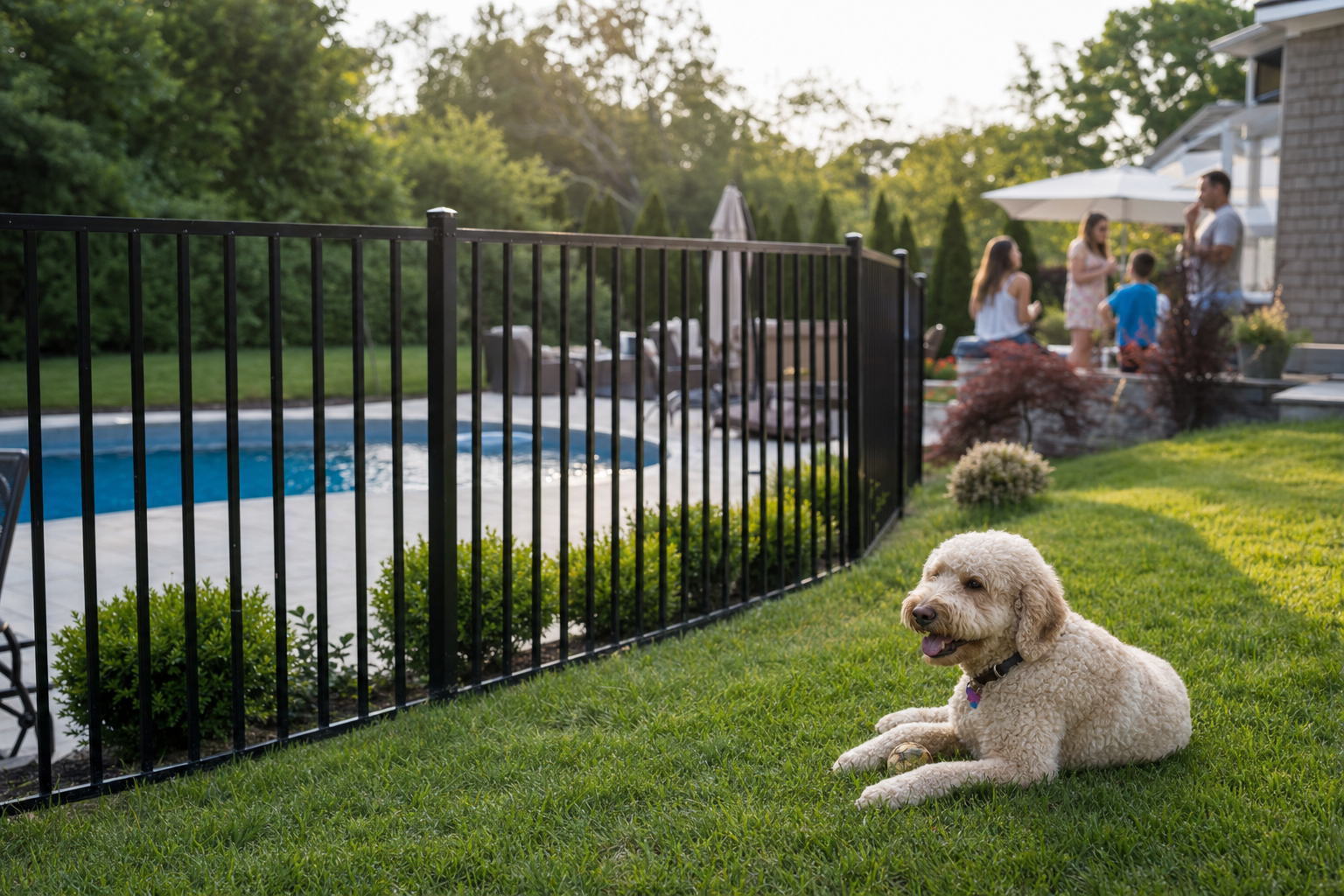
Aluminum is close to ideal around water. It will not rust the way steel or iron can in a wet, humid environment, it needs almost no upkeep beyond an occasional rinse, and its open picket design keeps clear sightlines to the pool so you can watch swimmers from the house or patio. It also looks modern and does not block breezes the way a solid fence would. For all those reasons, most of our pool projects use aluminum fence installation rather than wood or vinyl, which either rot or block the view.
- Rust-resistant powder-coated finish that suits a wet environment
- Open pickets so you can see the pool from the house
- Strong and rigid for a secure, climb-resistant barrier
- Very low maintenance, just an occasional rinse to stay clean
Height, gates, and the safety details that matter
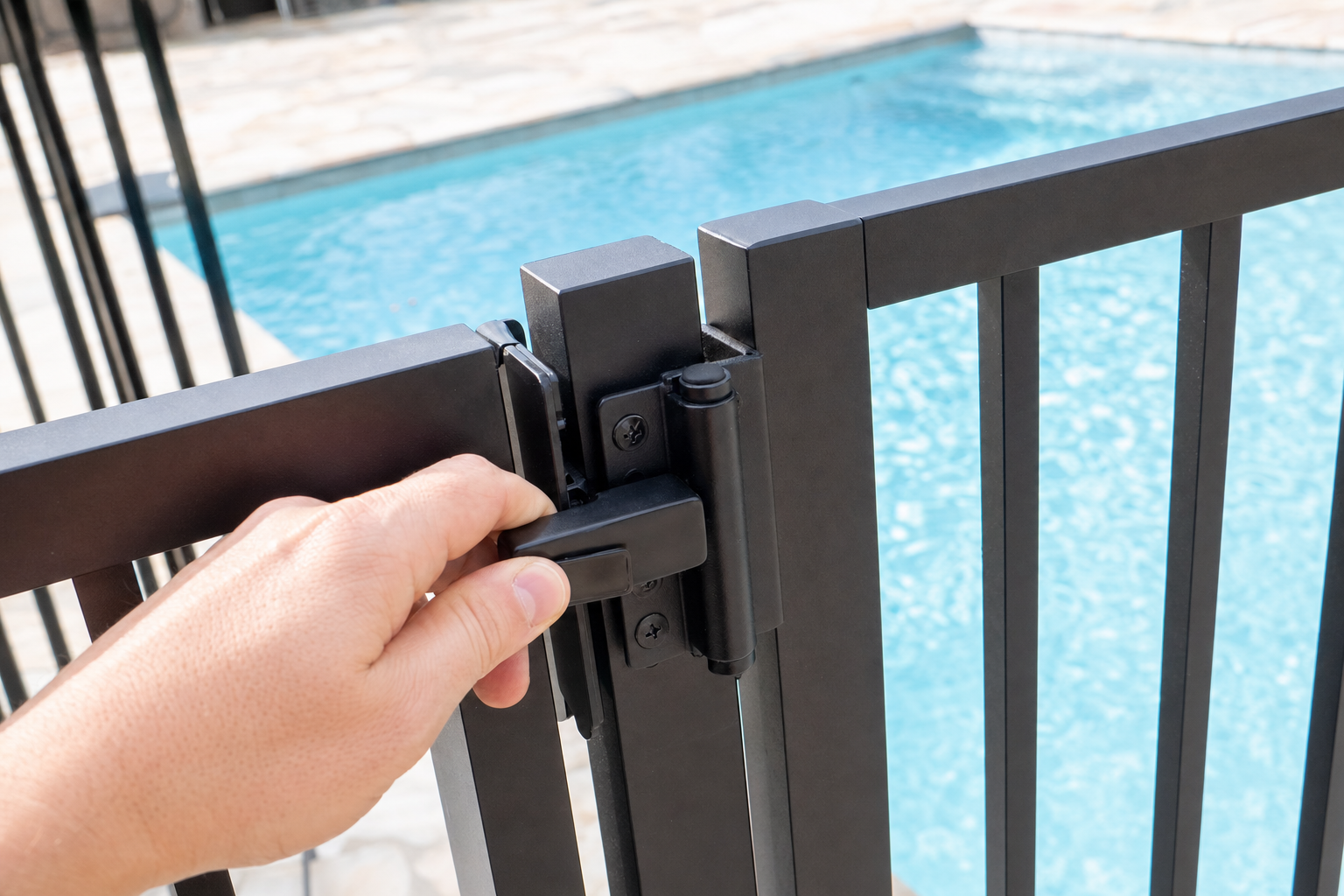
The parts of a pool fence that inspectors care about most, and that genuinely protect children, are height, gaps, and the gate. The barrier has to be tall enough to deter climbing, the pickets spaced closely enough that a small child cannot squeeze through, and the gate must swing away from the pool and latch itself automatically so it is never accidentally left open. Placing the latch higher up, out of a young child’s reach, adds another layer of safety. The table lists the features that keep a pool barrier both safe and compliant.
| Feature | Why it matters |
|---|---|
| Adequate barrier height | Deters young children from climbing over |
| Narrow picket spacing | Prevents a child from slipping through |
| Limited ground clearance | Stops crawling underneath |
| Self-closing, self-latching gate | Ensures the gate is never left open |
| Latch placed out of easy reach | Keeps small children from opening it |
Adding matching railings and decks
Many pool areas include steps, a raised deck, or a patio edge that also needs a railing for safety and a finished look. Matching aluminum railing installation keeps the whole space looking coordinated, since the fence and railings share the same color and profile, and it adds protection anywhere there is a drop or a step. Doing the fence and railings together in one project usually gives a cleaner result than adding railings later as an afterthought.
What affects an aluminum pool fence project
A pool fence project depends heavily on your yard and your town’s specific rules. The length of the run, the number of gates, and the grade of the ground all shape the plan, and code details can change what is required. Getting the local requirements confirmed early keeps the whole project on track and avoids a failed inspection.
- Linear footage and the height required by your town
- Number of self-closing, self-latching gates needed
- Grade and slope around the pool and patio
- Any matching railings for steps, decks, or raised patios
- Local code confirmation before the work begins
Conclusion
A pool fence is one of the few home projects where safety and law come first and style second, but aluminum lets you have both. If you are adding or replacing a pool barrier anywhere on Long Island, start with your town rules, then let us design an aluminum fence that meets them and looks great around your water.
Frequently asked questions
How tall does a pool fence have to be in New York?
New York’s safety code generally calls for a barrier of at least 48 inches, but your town enforces the exact figure and may have additional rules. We always confirm the local requirement before installing so your fence passes inspection the first time.
Does an aluminum pool fence rust?
No. Aluminum does not rust, which is exactly why it is the go-to material around pools. The powder-coated finish adds another layer of protection and keeps the fence looking clean with just an occasional rinse, even in a humid, splash-prone spot.
Can I add a self-closing gate to an existing fence?
In many cases yes, a compliant self-closing, self-latching gate can be added or swapped in. During a visit we check the existing setup and confirm what is needed to bring the whole barrier up to code.


