Quick answer: PVC fencing is popular on Long Island because it never needs painting, resists salt air and moisture, and comes in privacy, picket, and semi-private styles. Installation usually takes a day or two once posts are set in concrete.
PVC fencing, often called vinyl fencing, has become one of the most requested fence materials on Long Island, and it is easy to see why once you live with one. It looks clean for years, it holds up to coastal weather, and it never needs the scraping and repainting that a wood fence eventually demands. For busy homeowners who want a fence they can put up and forget about, PVC is often the obvious choice. All Island Fence & Railing fabricates its own PVC product right here on Long Island, which means tighter quality control over the material that goes into your yard before a panel is ever delivered to your property. If you are weighing your options, here is what PVC fence installation actually involves, how to pick the right style for your yard, and why the material handles the Long Island climate so well.
Why PVC works well on Long Island
Long Island weather is genuinely tough on fences. Salt air off the water, high humidity in summer, and hard swings from summer heat to winter freeze all wear materials down over time. PVC does not rot, rust, or absorb moisture, so it takes that climate in stride with very little upkeep. Unlike wood, it will not warp, splinter, or need annual sealing to stay structurally sound. Unlike metal fencing, it has no surface to corrode when salt air and humidity get to work on it year after year. A quick rinse with a garden hose knocks off pollen and salt film and keeps it looking new. That low-maintenance quality is the number one reason homeowners choose our PVC fence installation over wood, which needs sealing or staining every few years to fight the same weather.

PVC fence styles to consider
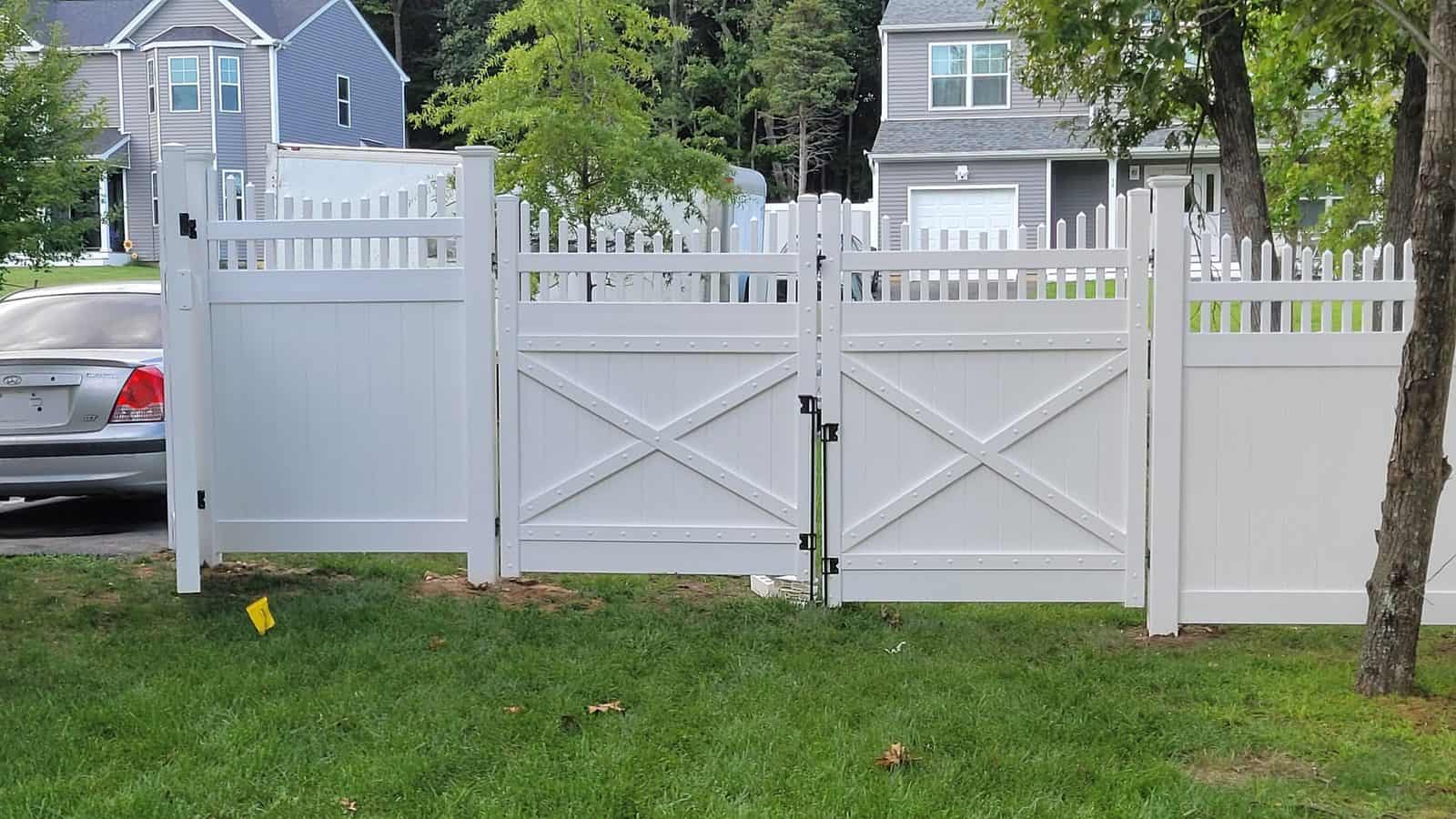
PVC comes in far more looks than most people expect, so the material rarely limits your design. The right style depends on whether you want full privacy, a decorative border, or something in between that keeps air and light moving through the yard. Heights typically run from three feet for a front-yard picket up to six feet for a full privacy panel, and post caps and gate hardware can be chosen to match the overall look of the house. Here are the styles homeowners ask for most, each of which we can install in a range of heights and colors.
- Privacy: solid panels that block sightlines completely, the most popular choice for pools, backyards, and anywhere you want a clear boundary from the street or a neighboring property
- Semi-private: panels with narrow gaps or lattice tops that allow airflow and natural light while still providing a visual buffer from the yard next door
- Picket: the classic open style for front yards and garden borders, available with flat, pointed, or decorative post tops to complement the look of the house
- Post & Rail: open horizontal rails on square posts, a clean option for larger properties that need a defined boundary without closing off the view

What the installation process looks like
A PVC fence install follows a clear set of steps, and knowing them helps you plan for the days the crew is on site and understand what the quote covers. Many Long Island towns and villages require a permit before fence work begins, and the rules — height limits, setback distances from the property line, and pool enclosure codes — vary by municipality. The single most important part of the physical install is setting the posts correctly, because posts set in solid concrete footings at the right depth are what keep the whole fence straight and standing through decades of weather.
- Verify local permit requirements and submit the application if your town requires one
- Confirm the property line and mark any underground utilities
- Set posts in concrete footings at the correct depth and spacing
- Let the footings cure so posts stay solid and plumb
- Fit rails and panels, then hang and adjust the gates
- Walk the finished line together to check level and alignment
Most residential PVC fences go up in a day or two of active work once the permit is cleared, with a short curing pause for the concrete. Larger yards, significant slope, or multiple custom gates may add a day to the schedule.
What affects your PVC fence project
The cost and timeline of a PVC fence depend on more than just the length of the run. The style and height you choose, the number of gates, and the condition of your yard all play a part. Sloped ground, tree roots, or an old fence that needs removal can add time, while a clear, level yard goes up quickly once the posts are set. Because All Island fabricates its own product locally, material lead times are generally tighter than projects that depend on outside suppliers, but the exact schedule always comes down to what the yard assessment reveals. A site visit gives you a specific breakdown of every factor before any commitment is made.
- Total linear footage plus the height and style of panels
- Number and size of gates, including any double drive gates
- Removing and hauling away an existing fence
- Ground conditions like slope, rock, or tree roots
- Property line and utility marking before digging
- Local permit fees and application requirements, which vary by Long Island town or village
Conclusion
PVC is a buy-once fence, and installed right, it keeps its clean look for many years with barely any work on your part. All Island Fence & Railing has been installing fences across Long Island for 35 years and fabricates its own product locally, so the material and the installation are both backed by the same team. If you own a home anywhere across Long Island and want a fence that looks sharp with almost no maintenance, a short site visit gives you an accurate style plan and price for your yard.
Frequently asked questions
How long does a PVC fence last?
A quality PVC fence can last for decades with almost no maintenance. Because it does not rot, rust, or absorb water, the main things that age other fences simply do not apply. Keeping it rinsed off is usually all it needs to stay looking new.
Does PVC fencing turn yellow?
Good PVC is made with UV inhibitors that resist yellowing and fading, which is why choosing a quality product matters. Cheaper PVC can chalk over time, but a well-made fence holds its color for many years in the Long Island sun.
Do I need a permit for a fence on Long Island?
Most Long Island towns and villages require a building permit before a fence is installed, and the rules differ from one municipality to the next. Height limits, required setbacks from the property line, and pool enclosure codes all vary, so checking with your local building department before work begins avoids delays and keeps the project on schedule. Permit requirements for your specific address are part of the conversation at an All Island site visit.


