

Fence installation cost on Long Island is set by a handful of things: how much fence you need, the material and height you choose, the number and size of gates, the ground along the fence line and whether an old fence has to come out. Local permit requirements can add to it as well. A short fence across the front of a house and a fully enclosed backyard sit at very different points on that scale.
Quick answer. A Long Island fence installation is quoted on the total linear footage plus the height and style of the panels, the number and size of gates, removal of any existing fence, ground conditions such as slope, rock or tree roots, and local permit requirements. Every yard is different, so the real number comes from a free estimate.
All Island Fence & Railing doesn't publish a one-size price list, because no two Long Island yards need the same fence. Instead, the team offers a free estimate, looking at your fence line, the material and height you want and the gates you need before pricing the job for your property.
Long Island adds a few local factors of its own. Many towns and villages require a permit before fence work begins, and height limits, setbacks from the property line and pool enclosure rules vary from one municipality to the next. Utility mark-outs through the New York One Call Center also come first and take several days before any digging starts.
What changes the installed cost
The fence you can see is only part of the project. Its length determines how much fencing is needed, but height, openings and the shape of the ground matter too. A material name on its own doesn't describe all of that work.
| Project detail | Why it matters to the budget | What you can identify now |
|---|---|---|
| Length of the fence | More fence requires more material and installation work. | Which boundaries need fencing and where each run ends. |
| Material and style | Wood, PVC and aluminum come in different designs and specifications. | Whether you want total privacy, partial privacy or an open view. |
| Height and decorative details | A different height or design changes the fence being priced. | Where privacy is needed and which details matter to you. |
| Gates | Each opening adds a working part with its own size and hardware. | Where people and equipment need to pass. |
| Ground and access | Changes in grade and the route into the yard affect installation planning. | Slopes, narrow passages and nearby planting or paving. |
| Existing fencing | Replacing a fence can involve removal work as well as new installation. | Which sections, posts and gates are still in place. |
| Permits and mark-outs | Many Long Island towns and villages require a permit, and utility mark-outs come before digging. | Your town or village rules and any neighborhood association requirements. |
Keep those details together when you think about a budget. A lower total for a shorter fence tells you little about the price of the longer fence you actually need. The same applies when one design includes a gate and another leaves the opening out.
Choose the material and style together
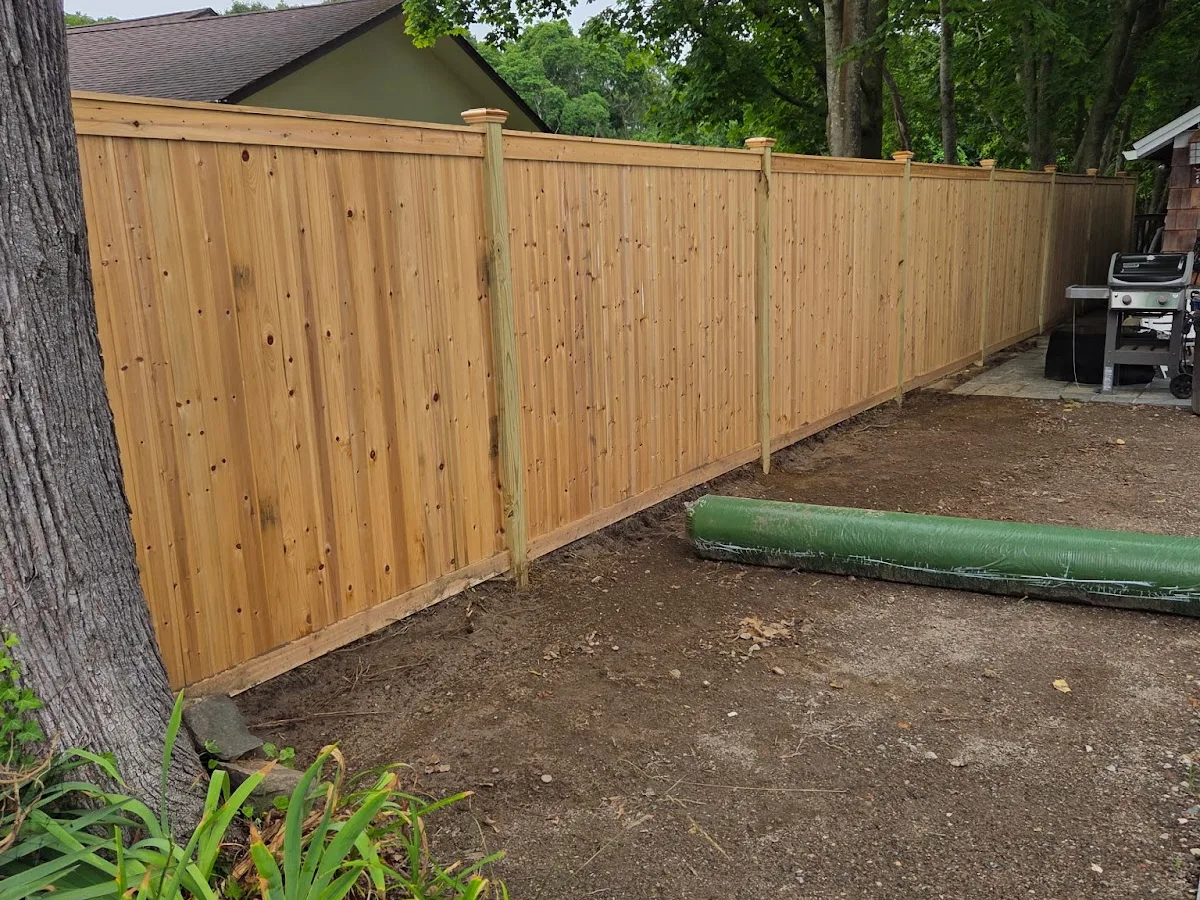
All Island Fence & Railing's wood range gives you a natural look with real choice in how much privacy the fence gives. Decide whether you want to hide the view through the fence or simply mark the edge of the yard before you compare prices.
If you're thinking about a wood fence for your Long Island home, All Island offers spruce and cedar in styles ranging from full privacy to picket and semi-privacy. Cedar can also need some maintenance over time, such as staining or treatment, so keep its maintenance in mind when planning your fence, not only the installation cost.
PVC also offers more than one look. All Island's PVC fencing includes privacy panels, semi-privacy panels and picket designs, along with colors including white, tan, gray and adobe. Keep the actual panel style and color in view when you compare prices.
Long Island weather is a cost factor over time. Salt air off the water, humid summers and freeze-thaw winters wear fences down. PVC does not rot, rust or absorb moisture, so upkeep stays low after installation.
Homeowners comparing vinyl fence companies on Long Island can also see what a PVC quote should cover, from linear footage to permits.
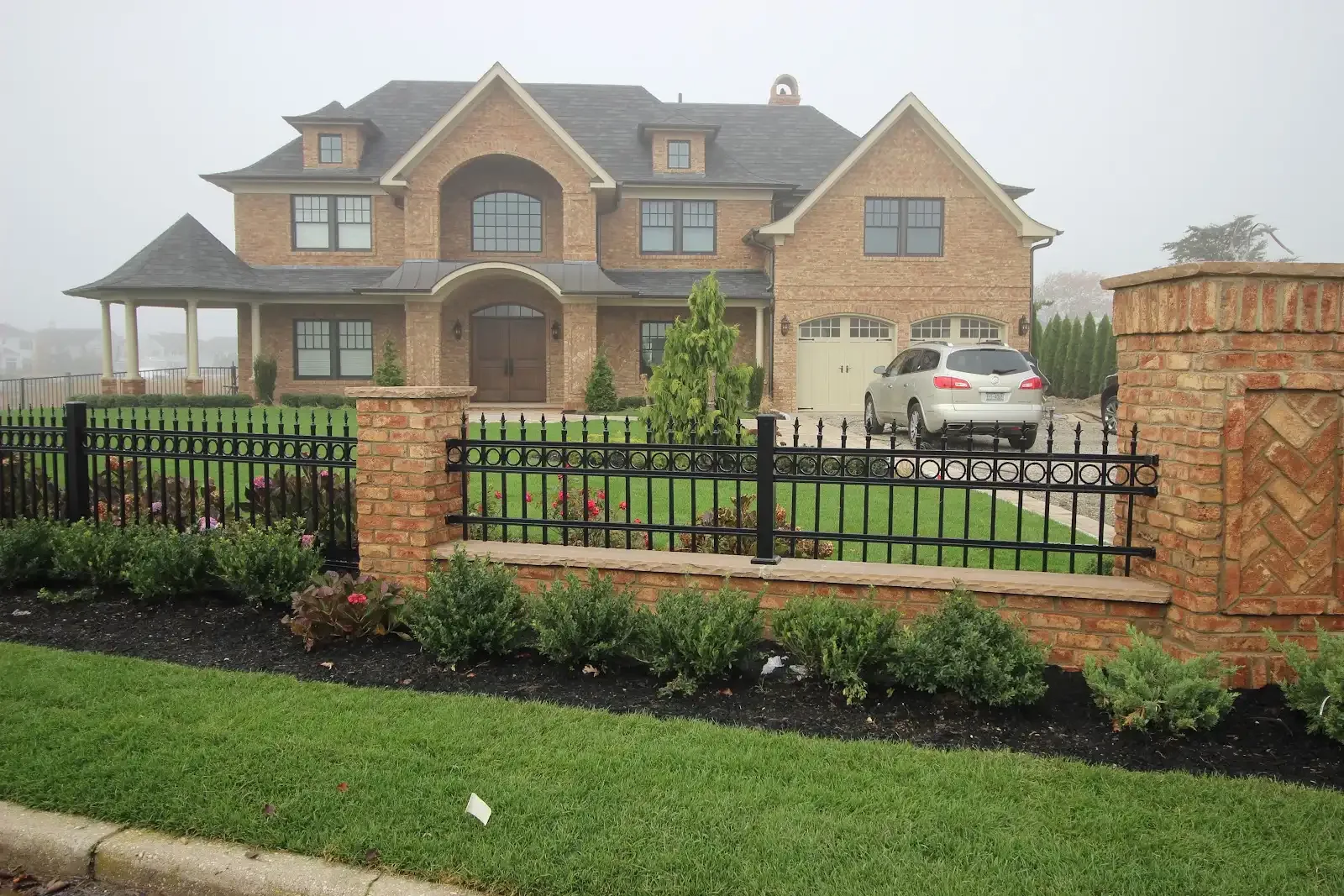
Aluminum is worth considering where you want an open boundary. All Island's aluminum range includes different heights, colors and styles, as well as walk and driveway gates. A solid privacy fence and an open aluminum fence do different jobs. Work out which result you want before comparing their prices.
Take a look at your property before choosing a fence
Before choosing a fence, look at where it would start and how it would run: where it meets the house, turns a corner or reaches an existing boundary. You may want privacy behind the patio while keeping the front of the property open. Write that down as separate parts of the project.
A rough sketch helps you see the whole layout. Mark the house, driveway, patio and proposed openings. It doesn't need to be a construction drawing. Its purpose is to keep a fence section from being forgotten while you're choosing a style.
Look down as well as along the boundary. A straight top line and a ground-hugging bottom are different choices, so decide which one you want.
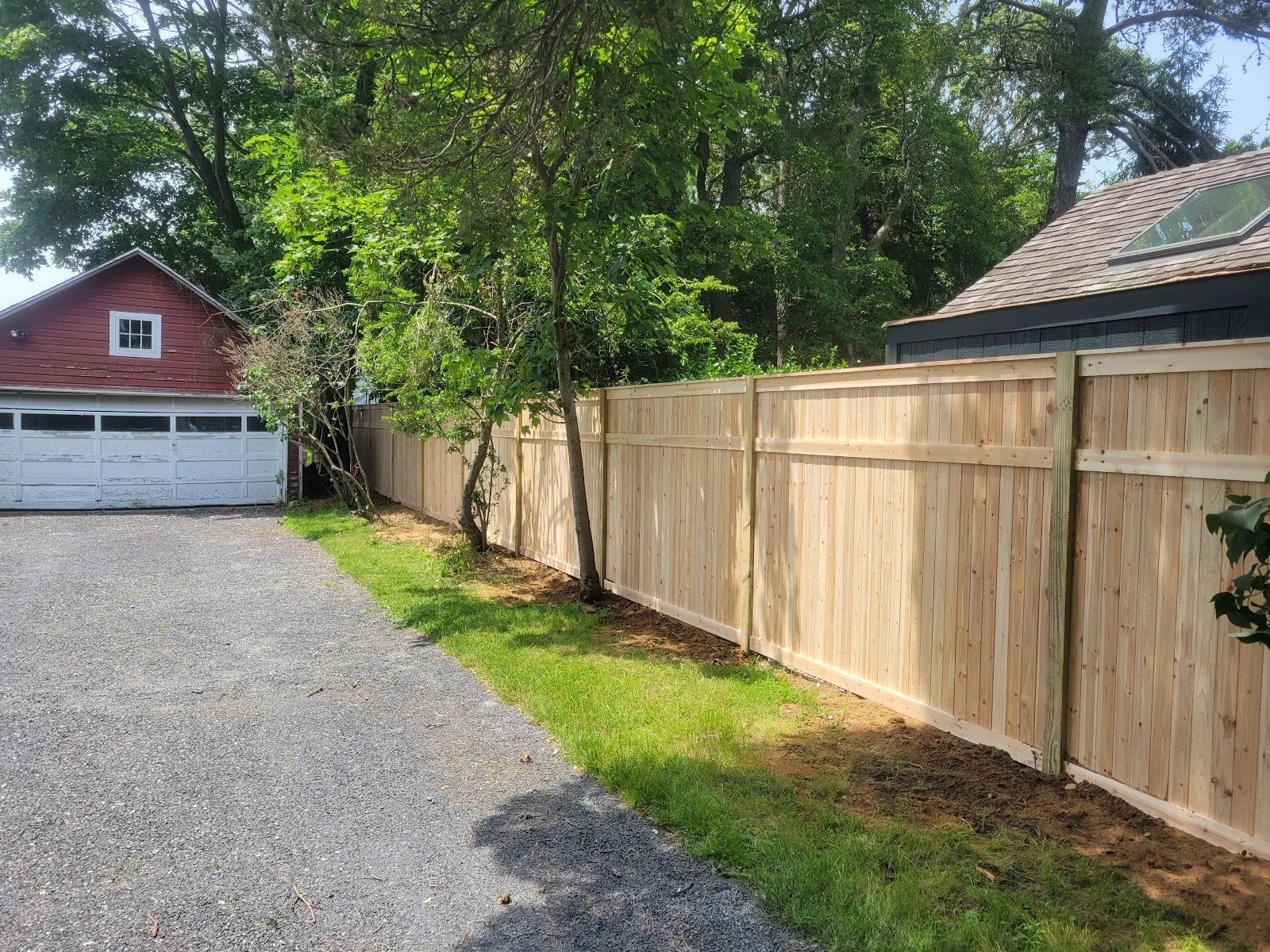
Ground and access both show up in the quote. Slope, rock and tree roots along the line affect the digging, and a narrow side passage, established planting or paving beside the fence line gives a different working area from an open lawn. Mark what is already there. If you're replacing a fence, include its posts and gates so the new layout accounts for the existing structure.
Include the gates you will use
Think through an ordinary week in the yard. Where do you walk in? Which route does the mower take? Does a garden cart need to pass through? Gate placement should suit those everyday routes, not just the way the fence looks from the street.
A walk gate and a driveway gate are different parts of a project. Their opening sizes, designs and hardware need to be considered with the rest of the fence. All Island's aluminum fencing includes both walk and driveway gates, with options such as crowned rails and gate accents. Only include extras that suit how you intend to use the opening.
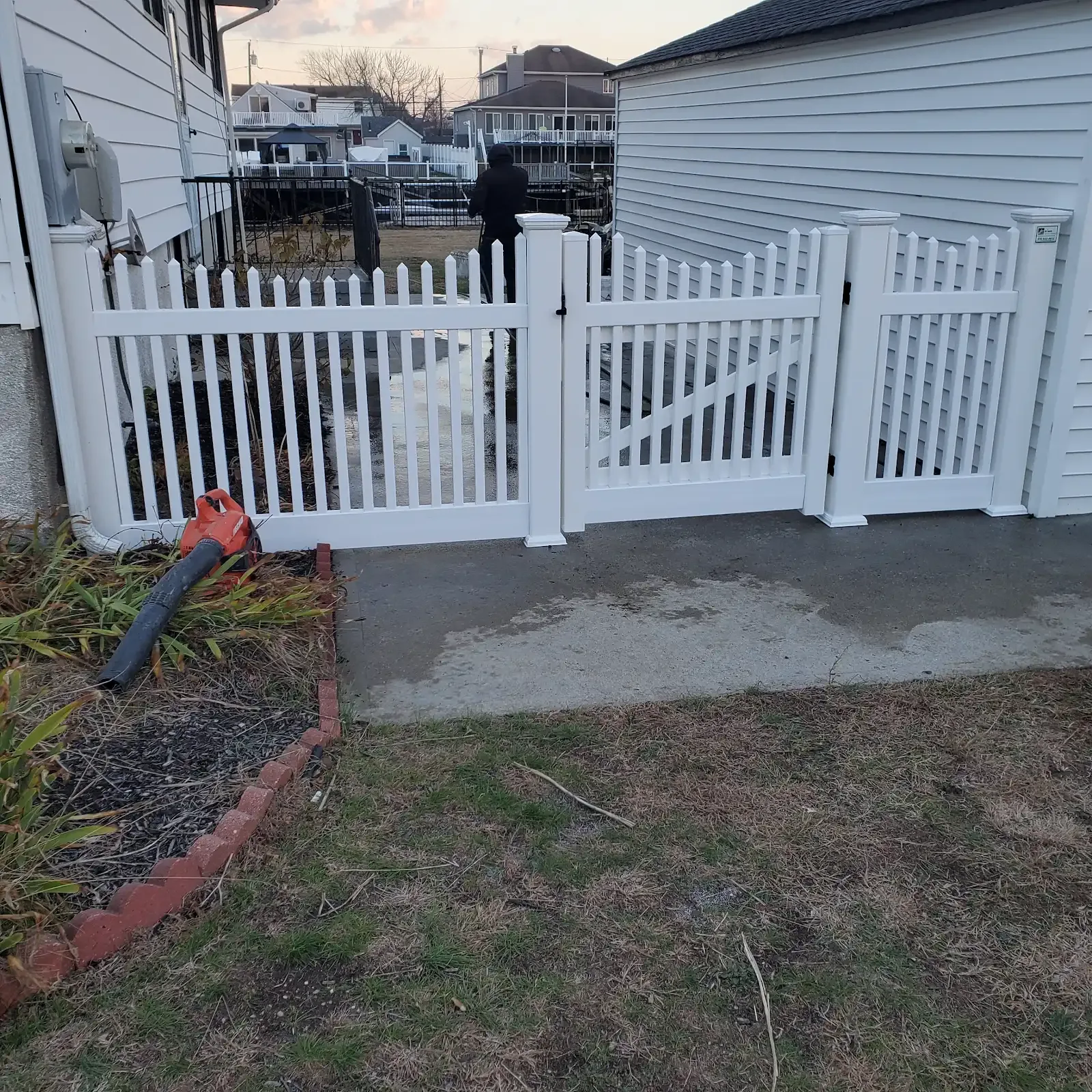
The swing matters as well. Look at the space around your proposed opening, including paths and planting. A gate needs usable room around it, not just a space on the fence line.
Compare quotes for the same fence
It's easier to judge a budget when the basic decisions stay consistent. If you change the height, move a gate and add another side of the yard, you're considering a different project. Keep an updated note of what you want so an early idea doesn't become confused with the final layout.
- The boundaries you want to enclose and the purpose of each section.
- The material, panel style and color you prefer.
- The intended height, with any undecided sections clearly marked.
- The number and purpose of the gates.
- Existing fencing and visible features along the proposed route.
- Optional decorative details you could leave out if needed.
Separate essential needs from appearance choices. If privacy beside a sitting area is the reason for the fence, keep that in the plan. Decorative details can be considered afterward. That gives you a clearer way to refine the project without losing the feature you wanted in the first place.
When you're planning fence installation on Long Island, project photos can help you describe your preferences, but they can't establish a price. Use them to show a panel pattern, an open view or a gate style you like; the layout and conditions at your own home are what set the price.
Start with a fence plan for your own yard
All Island Fence & Railing has been installing fences across Long Island since 1991, serving Nassau and Suffolk Counties as well as the 5 boroughs of NYC from its main showroom at 1320 Motor Pkwy in Islandia. A free estimate starts with a site visit, so the price reflects your actual fence line rather than an average.
When you're ready to discuss your project, contact All Island Fence & Railing or call 516-442-0012. Have your preferred layout and a few style examples in mind. That gives your cost discussion a useful starting point: the fence you actually want for your home.


